
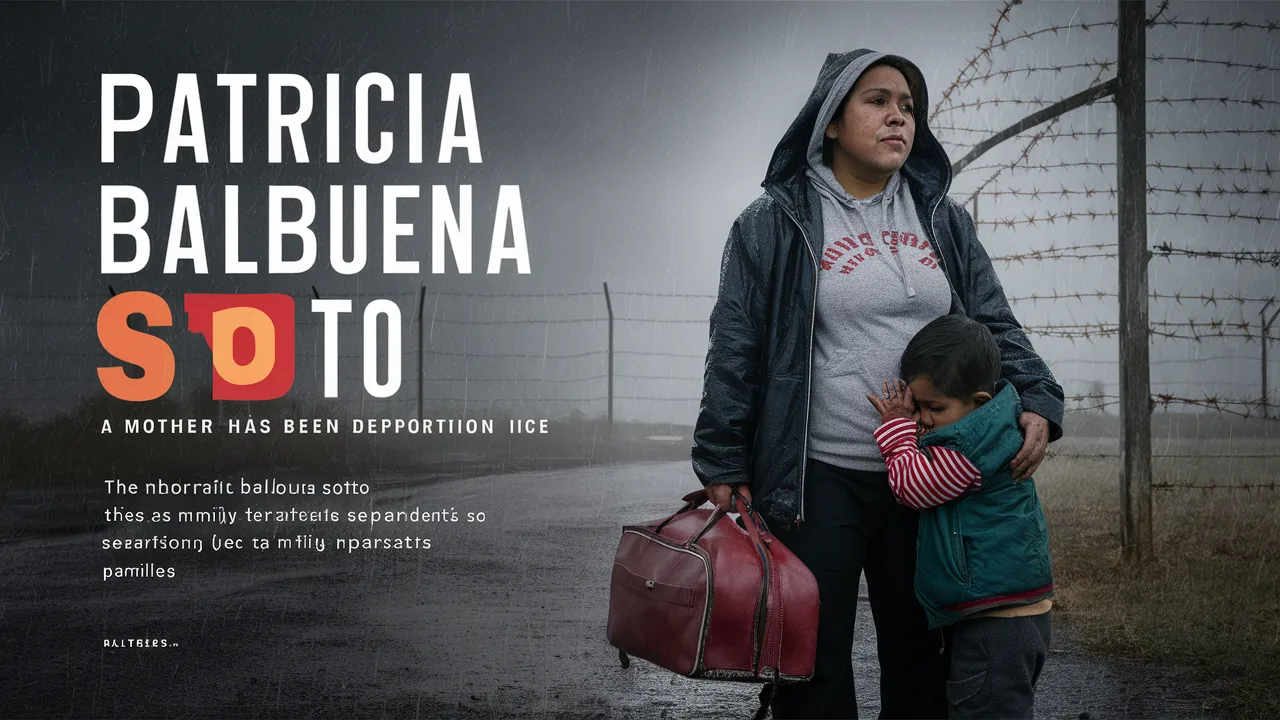
On October 1, 2025, major U.S. news outlets reported on a deeply personal and controversial immigration case involving Patricia Balbuena Soto, a mother who lived in the United States for more than 30 years and was deported by Immigration and Customs Enforcement (ICE) under the federal government’s current immigration enforcement policies. This case has become emblematic of the intense debate surrounding immigration enforcement in the United States. Advocates for immigrant families and civil rights organizations have raised urgent concerns about how such deportations affect children, communities, and due process in the American legal system. This article provides an in-depth account of what happened, the legal and human ramifications, and why this story has drawn widespread attention.
The Story of Patricia Balbuena Soto
Mother Deported ICE Patricia Balbuena Soto, a longtime resident of New Jersey, was deported by ICE in August 2025 after being taken into custody in July of that year. According to the reporting, she had lived in the United States since she was 19 years old, paying taxes, working as a waitress in Somers Point, and raising her family in the community for decades. Despite her long tenure in the country and deep community ties, she was arrested at her workplace and later deported to Mexico.
ICE’s official justification for her arrest included alleged criminal history — specifically charges including criminal mischief, burglary, unlawful possession of a weapon, and conspiracy related to a home invasion. The Department of Homeland Security stated she had a final order of removal and had previously been deported multiple times, making her arrest and subsequent removal lawful under current statutes.
What has captured public attention, however, is not only the legal basis but also the personal impact: Balbuena Soto’s 17-year-old daughter, who remains in the United States, was left behind and publicly expressed her anguish and disbelief over her mother’s sudden removal. Her daughter, Allison Garcia, revealed that she had not been properly notified when her mother was detained, learning only through co-workers and brief phone calls. She also stated her mother was not granted the legal representation her family had arranged.
Legal Context: Deportation and Due Process
The deportation of Balbuena Soto highlights several complex and highly debated aspects of U.S. immigration law, including due process rights, access to counsel, and the rights of noncitizens facing removal proceedings. Under U.S. law, noncitizens with final orders of removal — especially those who have reentered the country after prior deportations — are subject to arrest and deportation without a new hearing. The Department of Homeland Security has maintained that her removal complied with these statutory provisions.
However, critics — including Garcia — argue that the way the case was handled violated her mother’s rights, especially in terms of access to legal counsel and due process while in ICE custody. They contend that detainees must be allowed reasonable contact with lawyers and potentially even consular officials, especially if they fear return conditions in their home countries. This contention is part of a broader national debate over immigration enforcement practices under the present administration.
Family Separation and Human Impact
The case has had a profound emotional and logistical impact on Balbuena Soto’s family. Her teenage daughter is now separated from her primary caregiver, and her older brothers — U.S. citizens living in Texas — are geographically distant. The situation leaves her daughter with limited support and highlights the broader human toll that deportations can have on families.
This personal tragedy echoes other stories across the United States where undocumented parents have been removed, leaving U.S.-born children behind. Reports have shown that ICE enforcement actions have led to public outcry in communities across the country and intense social discourse on the stability and rights of families caught in immigration proceedings. Advocates argue that such separations can cause lasting psychological, economic, and educational disruption for U.S.-born children left without their parents.
Broader Policy Debate
Balbuena Soto’s deportation has transpired within the context of heightened immigration enforcement under the current federal government, which has pursued a more aggressive removal policy. This stance considers nearly all unauthorized individuals as removable, and prioritizes arrests and removals even for those with long-standing residence and community ties. Critics argue that this approach undermines not only due process protections but also broader family unity and community stability.
Supporters of strict immigration enforcement, by contrast, emphasize legal obligations to uphold removal orders and maintain border and immigration law integrity. They argue that compliance with existing orders — even for long-term residents — is part of the legal framework established by Congress and upheld by courts. The clash between these perspectives remains central to ongoing legislative and judicial debates over immigration reform.
Public Reaction and Advocacy
The story has led to reactions from immigration rights groups, legal advocates, and community members who are calling for policy changes and greater protections for families affected by deportation. Some advocates are pushing for reforms that would allow greater discretion in deportation cases where family separation could cause significant harm, especially for minor children who are U.S. citizens. Others are advocating for stronger due process protections and better access to legal representation for individuals in ICE custody.
Conclusion
The Mother Deported ICE Patricia Balbuena Soto is more than a news headline; it is a deeply personal story that illustrates the complex intersections of immigration law, public policy, and family integrity in the United States. While federal authorities maintain that her removal was lawful under current statutes, the human cost — particularly the separation of a mother from her daughter — continues to draw national attention and concern. This case underscores the ongoing debates over how immigration laws should be applied, and whether existing mechanisms fairly balance the enforcement of law with humane treatment and due process.
Frequently Asked Questions (FAQ)
Q: Who was Patricia Balbuena Soto?
A: Patricia Balbuena Soto was a long-time resident of the U.S. who lived for more than 30 years in New Jersey. She worked, raised her family, and paid taxes before being deported by ICE in August 2025.
Q: Why was she deported?
A: Government officials stated she had a final order of removal and past reentry violations, along with several criminal charges from local police that DHS cited as justification.
Q: Was she allowed legal representation?
A: Her daughter has publicly claimed that Balbuena Soto was denied meaningful access to the lawyer the family had arranged and was not given due process in custody.
Q: What happened to her daughter?
A: Her 17-year-old daughter remains in the United States, facing emotional and practical challenges after her mother’s sudden deportation.
Q: What broader issues does this case raise?
A: It highlights ongoing debates about immigration enforcement, due process rights, family separation, and how U.S. immigration laws are applied to long-term residents.
