
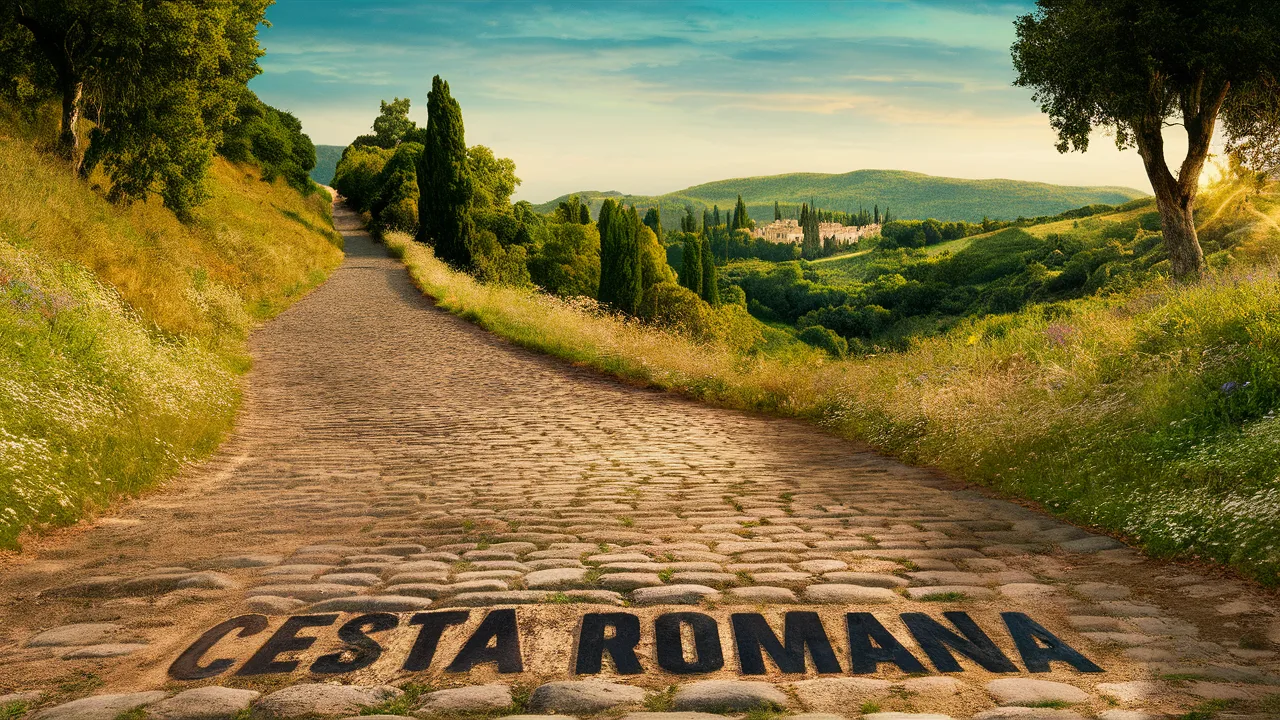
The term Cesta Romana, meaning “Roman road” in several Slavic languages, refers to the vast and sophisticated road network constructed by the ancient Romans to connect cities, provinces, military outposts, and trade hubs throughout the Roman Empire. These roads were not simple dirt paths but carefully engineered structures built to endure centuries of use. The Roman road system became one of the most remarkable infrastructural achievements in history, forming the backbone of imperial administration, military mobility, economic expansion, and cultural integration.
We recognize that the concept of the Cesta Romana extends beyond transportation. It symbolizes Roman organizational efficiency, engineering brilliance, and strategic governance. From the Italian Peninsula to the Balkans, Gaul, Hispania, and parts of North Africa and the Middle East, Roman roads shaped the political and economic landscape of Europe for generations. Many modern highways still follow the routes first established by Roman engineers, reflecting the durability and foresight embedded in their design.
Historical Origins of the Cesta Romana
The development of the Cesta Romana network began in the early Roman Republic as military necessity drove infrastructure innovation. As Rome expanded beyond the city-state stage, reliable transportation became essential for troop movements and logistical coordination. One of the earliest and most famous Roman roads, the Via Appia, was constructed in 312 BCE to connect Rome to southern Italy. This monumental project marked the beginning of systematic road building across the expanding empire.
Over time, Roman authorities institutionalized road construction under magistrates and military engineers. The network grew to span over 400,000 kilometers at its peak, with approximately 80,000 kilometers paved with stone. These roads connected major cities such as Rome and extended across provinces, linking regions that today belong to countries like Italy, France, Spain, and Croatia.
Engineering Excellence: Construction Techniques of Roman Roads
The durability of the Cesta Romana was no accident. Roman engineers developed a layered construction method designed for longevity and stability. A typical Roman road included several structural layers:
-
Statumen – A foundation of large stones to ensure drainage and structural stability.
-
Rudus – A layer of compacted gravel or crushed stones.
-
Nucleus – A finer layer of sand or concrete-like material.
-
Summum Dorsum – The top surface, often paved with fitted stone slabs.
This layered approach ensured resilience against weather conditions and heavy use. Roads were slightly curved in the center to allow water runoff, preventing erosion and surface damage. The meticulous craftsmanship of Roman engineers explains why remnants of these roads remain visible today.
We observe that Roman road construction combined practicality with precision. Surveyors used tools such as the groma to maintain straight alignments over long distances. The emphasis on straight routes demonstrated Roman efficiency and strategic thinking, even when terrain posed challenges.
Military and Strategic Importance of the Cesta Romana
The Roman road system was fundamentally a military asset. The Cesta Romana network enabled rapid troop deployment across vast territories, reinforcing frontier defenses and suppressing rebellions. Military camps were strategically placed along key routes, ensuring continuous security and communication.
Efficient roads allowed the Roman legions to maintain control over distant provinces. The empire’s stability depended heavily on the ability to mobilize forces quickly, and Roman roads provided that advantage. The speed at which Roman armies could move became a decisive factor in maintaining dominance across Europe and the Mediterranean basin.
Economic and Commercial Expansion Through Roman Roads
Beyond military utility, the Cesta Romana facilitated trade and commerce. Merchants transported goods such as grain, olive oil, wine, textiles, and metals along established routes. Trade centers flourished where roads intersected, giving rise to vibrant urban markets.
The integration of provincial economies into a unified imperial system strengthened economic growth. Standardized road networks reduced transportation time and enhanced market accessibility. This interconnected infrastructure promoted regional specialization and expanded commercial opportunities.
Cultural and Administrative Integration
The Roman road system also contributed significantly to cultural diffusion. As people traveled along the Cesta Romana, they exchanged languages, customs, technologies, and ideas. Roman law, architecture, and governance models spread throughout conquered territories.
Administrative efficiency improved as officials could travel between provinces to enforce policies and collect taxes. Communication between Rome and distant territories became more reliable, reinforcing centralized authority.
Notable Routes in the Cesta Romana Network
Several historic roads stand out within the Roman network. The Via Egnatia connected the Adriatic Sea to Byzantium, facilitating east-west trade. The Via Augusta extended across Hispania, enhancing Iberian connectivity. These routes exemplify the geographical reach and engineering sophistication of Roman infrastructure.
Each road was marked by milestones indicating distances to Rome, reinforcing the symbolic centrality of the capital.
Legacy of the Cesta Romana in Modern Infrastructure
The enduring legacy of the Cesta Romana is visible in contemporary European road systems. Many modern highways align with ancient Roman routes because their placement was strategically and geographically optimal. Urban planning in parts of Europe still reflects Roman layouts.
We recognize that Roman engineering principles influenced later civilizations, shaping medieval trade routes and modern transportation planning. The phrase “All roads lead to Rome” underscores the centrality of this infrastructure network in shaping European development.
Archaeological and Tourism Significance
Today, remnants of Roman roads attract historians, archaeologists, and tourists. Preserved sections offer tangible connections to antiquity. Walking along an ancient Roman road provides insight into the scale and ambition of Roman engineering achievements.
Museums and heritage sites across Europe highlight these roads as symbols of classical civilization and architectural ingenuity.
Conclusion: The Enduring Importance of the Cesta Romana
The Cesta Romana represents far more than ancient pavement. It embodies strategic planning, engineering precision, military efficiency, and economic integration. The Roman road network transformed scattered territories into a cohesive empire and laid foundations for modern European infrastructure. Its influence persists in transportation systems, urban design, and cultural memory.
Understanding the Cesta Romana allows us to appreciate the scale of Roman ambition and the practical brilliance that sustained one of history’s most powerful civilizations.
Frequently Asked Questions (FAQ)
What does Cesta Romana mean?
Cesta Romana translates to “Roman road” and refers to the extensive road network built by the Roman Empire.
Why were Roman roads so durable?
They were constructed using layered engineering techniques with stone foundations, ensuring structural stability and drainage.
How extensive was the Roman road network?
At its height, the network covered approximately 400,000 kilometers across Europe, North Africa, and parts of Asia.Are any Roman roads still in use today?
Yes, many modern European roads follow the original paths of Roman routes due to their strategic placement.
What was the main purpose of Roman roads?
The primary purpose was military mobility, but they also supported trade, administration, and cultural integration.
